A Century of Faith
in Kajiado Catholic Parish
From humble beginnings along the dusty railway line in 1918 to a vibrant faith community today, discover the remarkable journey of St. John the Evangelist Parish.
Connect With Us
"History is the memory of things said and done."
1918-1960: The Pioneer Years
Our story begins along the dusty railway line in 1918, when Holy Ghost Father Julius Blais CSSp made the arduous journey from St. Peter Claver's in Nairobi. With unwavering dedication, Fr. Blais traveled by train to scattered communities—Kima, Kajiado, Magadi, Ulu, and Sultan Hamud—bringing the sacraments to Catholics working on the railway.
His parish extended across vast distances: from Thika and Kilimambogo through all of Kajiado District to Machakos and Kitui. The next mission to the east was Bura, a staggering 300 kilometers away. These early visits were infrequent and incredibly challenging, yet they planted the seeds of faith in our community. Station by station, wherever Catholics gathered, Mass was celebrated. This was true apostolic work in the most demanding conditions.
In the following decades, priests from Mbitini also reached our area, with baptisms recorded in their registers. By 1960, under the Prefecture of Ngong, pastoral care came from Kiserian. When Kiserian Minor Seminary was established around 1956, a young Fr. John Njenga—who would later become Bishop of Eldoret and Archbishop of Mombasa—began visiting every two or three months.
1960-1967: A Parish Takes Root
The First Mass
In 1960, Fr. Njenga accompanied a visiting priest to celebrate what would become the first of many regular Masses in Kajiado. They arrived on a Sunday evening at the Railway workers' community hall. The scene was humble: they waited at 5 p.m. for workers who were drinking and smoking to clear out, the smell of drink and tobacco overpowering. Yet when Mass began, twenty to thirty faithful gathered—railway workers, Goan families from the Administration, and police families.
After Mass, the priests found hospitality with Dr. Migwi, the Catholic doctor in charge of Kajiado District Hospital. He, his wife, and their three young daughters welcomed the priests with warmth that embodied the spirit of Christian fellowship.
Kenya Marble Quarries: An Unexpected Sanctuary
The next morning brought a 6 a.m. Mass at Kenya Marble Quarries, 12 kilometers from town. Workers gathered in their small recreation hall before the 7 o'clock shift. The manager, Mr. Alan Chadwick, though not Catholic himself, showed extraordinary hospitality that would continue for years. When Dr. Migwi later left Kajiado, Mr. Chadwick opened his home to visiting priests, providing showers, meals, and a good night's rest—a kindness that became legendary in the parish's early years.
Building More Than Buildings
These monthly visits followed a pattern that built relationships as much as infrastructure. After the early morning Mass at the quarries and breakfast with Mr. Chadwick, the priest would head to the Government Primary Boarding School. There, the headmaster allowed religious instruction—initially to just three Catholic students.
Visits to the District Education Officer followed, where matters concerning Catholic-managed schools at Ngong, Kiserian, Magadi, Kajiado Township, and Rombo were discussed. Courtesy calls to the District Commissioner were essential in this closed district where passes were required. These weren't merely obligatory—they were friendly, "very English" affairs ("Padre, jolly good show!") that proved invaluable when addressing land or educational challenges.
First Foundations
In 1962, our first school opened. A local contractor built a classroom and office, fully funded by the Diocese. Mr. Peter P. Ndungu became our first teacher, transferred from Ngong Township School. That small beginning grew into a three-stream school serving over a thousand students.
Land acquisition proved challenging. The colonial administration resisted granting land in townships, initially providing only 3 acres for the primary school and one acre for the mission. It would take vision and persistence to secure our future home.
1968-1976: The Parish Establishes Its Home
Fr. O'Connell: The First Resident Priest
Everything changed when Fr. Daniel O'Connell MHM arrived around 1967-68. Initially assigned to Kiserian with plans to work "long weekends" in Kajiado, those weekends merged into one another until he was, as the chronicle notes, "lost" in Kajiado—found by the community he would serve so faithfully.
Fr. O'Connell began in a safari house he had built for weekend visits: a simple 22ft x 22ft structure with a bedroom, dining/sitting room, kitchen, and outside toilet. From this humble beginning, he cared for Kajiado and many outstations, becoming especially beloved at Olkejuado Secondary School where he coached basketball and helped the school climb the league tables.
Securing Our Future
Recognizing that a thriving parish needed more space, Fr. O'Connell applied for additional land. On June 1, 1970, he secured 2.2 hectares (5.46 acres) on a 33-year lease—the ground where our parish would truly flourish. Working with Brother Jan Huitbraken MHM, he built an oratory that became the spiritual heart of weekday worship, a place where daily Mass could be celebrated and the Blessed Sacrament reserved in dignity.
Remarkable Growth
By 1976, the transformation was evident. Our Catholic population had grown to 1,000 (reaching 4,000 by 2003), with 200 practicing Catholics (2,000 by 2003). Mass centers dotted the landscape: the Township drew 120-200 weekly, Namanga 20, Kenya Marble Quarries 12, and Maili Tisa 10. Kitengela, with no attendees in 1976, would explode to 3,750 by 2003.
The community hall served as our church on Sundays, regularly filling its 400-person capacity. It also generated income through rentals for political meetings, wedding receptions, and important government gatherings—the best-equipped hall in town.
1990-2003: Our Beautiful Church: A Dream Realized
The crowning achievement of our parish is the church building itself—widely regarded as the most beautiful church in the diocese. This magnificent structure rose through dedication, sacrifice, and the collaborative efforts of many priests over more than a decade.
Fr. Brouder excavated the foundations, literally breaking ground for the dream. Fr. Shayo (1990) completed the foundation and erected the steel structure. Then, bit by bit, through years of financial struggle and unwavering determination, successive priests advanced the work.
Fr. C. Geraghty brought the vision to completion in 2003. With exceptional taste, he finished a church that is both beautiful and functional, seating approximately 900 worshippers. The landscaping transformed the entire compound into an attractive sanctuary. Fr. Geraghty also solved our persistent water shortage by constructing massive tanks fed from the building's extensive roofing—turning a problem into providence.
When the church opened, it fulfilled years of longing. The community hall, faithful servant of our Sunday worship for so many years, could return to its role as gathering space and income generator for the parish.
1971-Present: Silent Witnesses: The Little Sisters of Jesus
In 1971, a profound spiritual presence arrived in Kajiado. The Little Sisters of Jesus established their House of Prayer on a plot granted by the County Council at the township's edge, with distant views of Kilimanjaro. Once isolated, the location is now surrounded by urban growth—a metaphor for their quiet, transformative influence.
Living their charism of the Holy Family in Nazareth, the Little Sisters became neighbors and friends to the poor and unevangelized. They don't evangelize through programs but through presence, allowing Christ's love to flow through ordinary acts of friendship and service. Their House of Prayer has welcomed countless priests, religious, and bishops for silent retreats.
Among the Maasai
Perhaps their most remarkable witness was the decision by two Sisters to live in a Maasai boma for over 25 years. They built a simple hut like their neighbors and embraced the spartan life of Maasai women—fetching water and firewood, tending livestock, enduring sun and drought, sharing joys and sorrows.
The Maasai women were initially puzzled by these unmarried women without children who spent hours in prayer before a small box in their hut. Gradually, understanding emerged. The Maasai reached two profound conclusions: these women were daughters of God who had chosen not to marry, and God was truly present in that "little Box"—the Blessed Sacrament. Through lived witness rather than words, the Little Sisters led the Maasai to believe in the Real Presence of Christ in the Eucharist.
Today and Tomorrow
As District Headquarters, Kajiado holds strategic importance. Our Church's presence is valued by both the Administration and County Council, contributing significantly to the town's character and development.
We have journeyed from a priest waiting for railway workers to leave a smoke-filled hall in 1960, to a thriving parish with a magnificent church, active lay community, numerous programs, and ten outstations. Our latest initiative—a Parochial Primary School—responds to parents' desire for excellent Catholic education for their children.
The road has been long, sometimes difficult. We've experienced frequent changes in pastoral leadership, financial struggles, and the normal challenges of any growing community. Yet through it all, the faith planted in 1918 has blossomed into something beautiful.
United with active, forward-looking clergy and supported by dedicated laity, Kajiado Catholic Parish stands as a testament to what faith, perseverance, and community can accomplish. Our story continues, written each day by every person who gathers for worship, serves their neighbor, and carries Christ's love into the world.
History narrated in 'Mission to the Maasai' by the Late Bishop Colin Davies, MHM
Key Moments in Our Journey
A timeline of major milestones from our early missionary beginnings to the vibrant parish community we are today.
The Pioneer Years
Our story begins along the dusty railway line in 1918, when Holy Ghost Father Julius Blais CSSp made the arduous journey from St. Peter Claver's in Nairobi. With unwavering dedication, Fr. Blais traveled by train to scattered communities—Kima, Kajiado, Magadi, Ulu, and Sultan Hamud—bringing the sacraments to Catholics working on the railway.
Key Highlights
- Fr. Blais' parish extended from Thika and Kilimambogo through all of Kajiado District to Machakos and Kitui
- The next mission to the east was Bura, a staggering 300 kilometers away
- Early visits were infrequent and incredibly challenging, yet they planted the seeds of faith
- Station by station, wherever Catholics gathered, Mass was celebrated
- By 1960, pastoral care came from Kiserian under the Prefecture of Ngong
- Fr. John Njenga (later Bishop of Eldoret and Archbishop of Mombasa) began visiting every two or three months
A Parish Takes Root
In 1960, Fr. Njenga accompanied a visiting priest to celebrate what would become the first of many regular Masses in Kajiado. They arrived on a Sunday evening at the Railway workers' community hall. The scene was humble: they waited at 5 p.m. for workers who were drinking and smoking to clear out. Yet when Mass began, twenty to thirty faithful gathered—railway workers, Goan families from the Administration, and police families.
Key Highlights
- After Mass, priests found hospitality with Dr. Migwi, the Catholic doctor at Kajiado District Hospital
- 6 a.m. Mass at Kenya Marble Quarries, 12 kilometers from town, became a regular feature
- Mr. Alan Chadwick, the quarries manager, showed extraordinary hospitality for years
- In 1962, our first school opened with a classroom and office fully funded by the Diocese
- Mr. Peter P. Ndungu became our first teacher, transferred from Ngong Township School
- Monthly visits followed a pattern that built relationships as much as infrastructure
- The colonial administration initially provided only 3 acres for the primary school and one acre for the mission
The Parish Establishes Its Home
Everything changed when Fr. Daniel O'Connell MHM arrived around 1967-68. Initially assigned to Kiserian with plans to work 'long weekends' in Kajiado, those weekends merged into one another until he was 'lost' in Kajiado—found by the community he would serve so faithfully. Fr. O'Connell began in a safari house: a simple 22ft x 22ft structure with a bedroom, dining/sitting room, kitchen, and outside toilet.
Key Highlights
- On June 1, 1970, Fr. O'Connell secured 2.2 hectares (5.46 acres) on a 33-year lease
- Working with Brother Jan Huitbraken MHM, he built an oratory for weekday worship
- By 1976, Catholic population had grown to 1,000 (reaching 4,000 by 2003)
- Mass centers dotted the landscape: Township (120-200 weekly), Namanga (20), Kenya Marble Quarries (12)
- The community hall served as our church on Sundays, regularly filling its 400-person capacity
- Fr. O'Connell became especially beloved at Olkejuado Secondary School where he coached basketball
Servants of the Gospel: Our Priests
From 1968 to 2003, dedicated priests shepherded our community through growth and challenge. Each priest contributed uniquely to our parish's development, despite frequent changes due to priests leaving ministry, missionary society reassignments, or advanced studies.
Key Highlights
- The Foundations (1968-1980): Fr. D. O'Connell, Fr. W. Meys, Fr. T. Brouder, Fr. M. O'Neill, Fr. J.D. Cronin, Fr. A. Vernner, Fr. J. Heaney, Fr. R. Hogan, Fr. F. Mol, Fr. A. Wolf
- Building and Growth (1980-1994): Fr. A. Shayo, Fr. J. Van Dyk, Fr. M. Smyth, Fr. P. Coyne, Fr. R. Hogan, Fr. G. Geraghty, Fr. R. Tarimo, Fr. D. Waweru, Fr. I. Munishi, Fr. E. Tarimo
- Completion and Consolidation (1994-2003): Fr. C. Geraghty, Fr. Joseph Y, Fr. S. Breem, Fr. D. Ganley
- In October 1987, Fr. Edmund Tarimo became our first Diocesan Youth Chaplain
- Each priest left their mark on the parish, building upon the foundations laid by their predecessors
Our Beautiful Church: A Dream Realized
The crowning achievement of our parish is the church building itself—widely regarded as the most beautiful church in the diocese. This magnificent structure rose through dedication, sacrifice, and the collaborative efforts of many priests over more than a decade. Fr. Brouder excavated the foundations, Fr. Shayo (1990) completed the foundation and erected the steel structure. Then, bit by bit, through years of financial struggle and unwavering determination, successive priests advanced the work.
Key Highlights
- Fr. C. Geraghty brought the vision to completion in 2003
- The church is both beautiful and functional, seating approximately 900 worshippers
- The landscaping transformed the entire compound into an attractive sanctuary
- Fr. Geraghty solved persistent water shortage by constructing massive tanks fed from the building's extensive roofing
- Bishop Colin Davies arranged a twinning with St. Cecilia Church in Germany for financial support
- Fr. Zucco, a Comboni missionary, designed the church and oversaw construction
- The church was officially opened on July 12, 1992
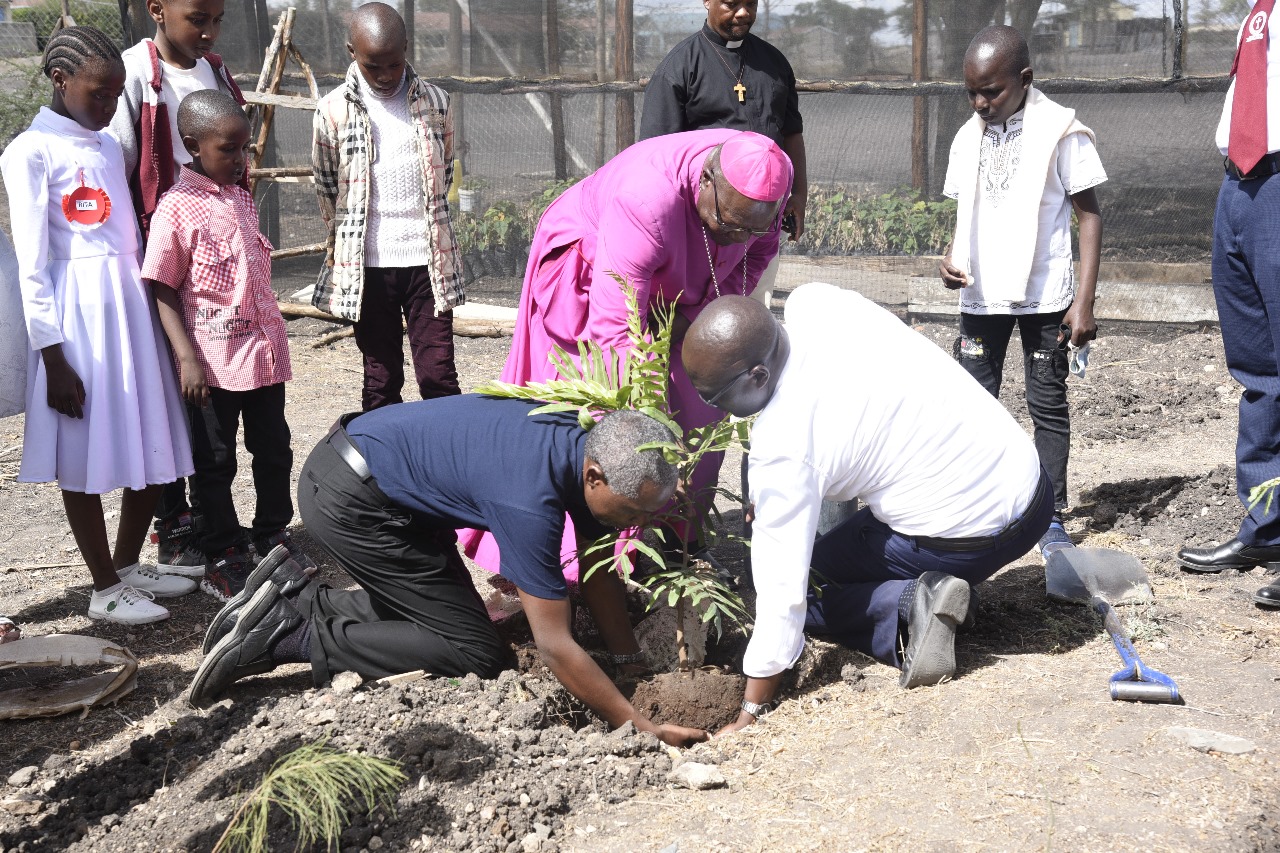
Silent Witnesses: The Little Sisters of Jesus
In 1971, a profound spiritual presence arrived in Kajiado. The Little Sisters of Jesus established their House of Prayer on a plot granted by the County Council at the township's edge, with distant views of Kilimanjaro. Living their charism of the Holy Family in Nazareth, the Little Sisters became neighbors and friends to the poor and unevangelized.
Key Highlights
- They don't evangelize through programs but through presence, allowing Christ's love to flow through ordinary acts
- Their House of Prayer has welcomed countless priests, religious, and bishops for silent retreats
- Two Sisters lived in a Maasai boma for over 25 years, building a simple hut like their neighbors
- They embraced the spartan life of Maasai women—fetching water and firewood, tending livestock, enduring sun and drought
- Through lived witness, the Little Sisters led the Maasai to believe in the Real Presence of Christ in the Eucharist
- The Maasai concluded: these women were daughters of God who had chosen not to marry, and God was truly present in the Blessed Sacrament
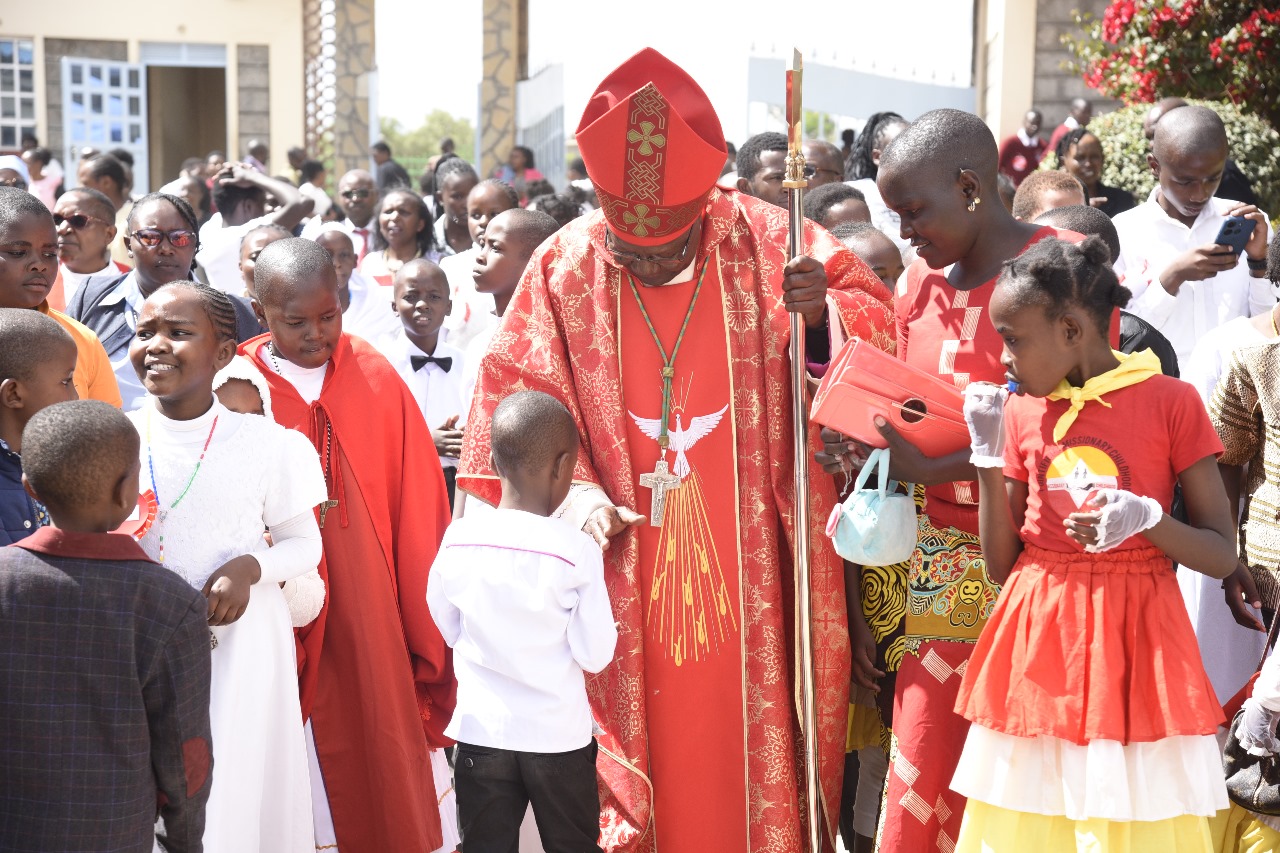
Our Outstations: Faith Across the Landscape
The Isinya outstation began with an unexpected phone call. Vice President Professor George Saitoti offered a 2-acre plot on the main Nairobi-Arusha road, 22 kilometers north of Kajiado, on one condition: the Diocese must build immediately. The church of St. Cecilia in Germany 'twinned' with Isinya, solving most financial challenges.
Key Highlights
- On July 12, 1992, Isinya church was officially opened and blessed
- During school terms, 150-200 students from Arap Moi Girls Secondary Boarding School attend Mass
- Namanga began as our outstation but grew into an important parish
- Bissil ('Our Lady of the Way'), 24 kilometers south, has a well-built 300-seat church
- Enkorika, dating to the 1960s and located 30 kilometers east toward Mashuru, hosts a Catholic-sponsored school
- Other outstations include Elangata Wuas, Olenarao, Sajiloni, Nkoile, Kilonito, and Maili Tisa
- Fr. Mol envisioned a Maasai cultural center to preserve archives, literature, artifacts, and samples
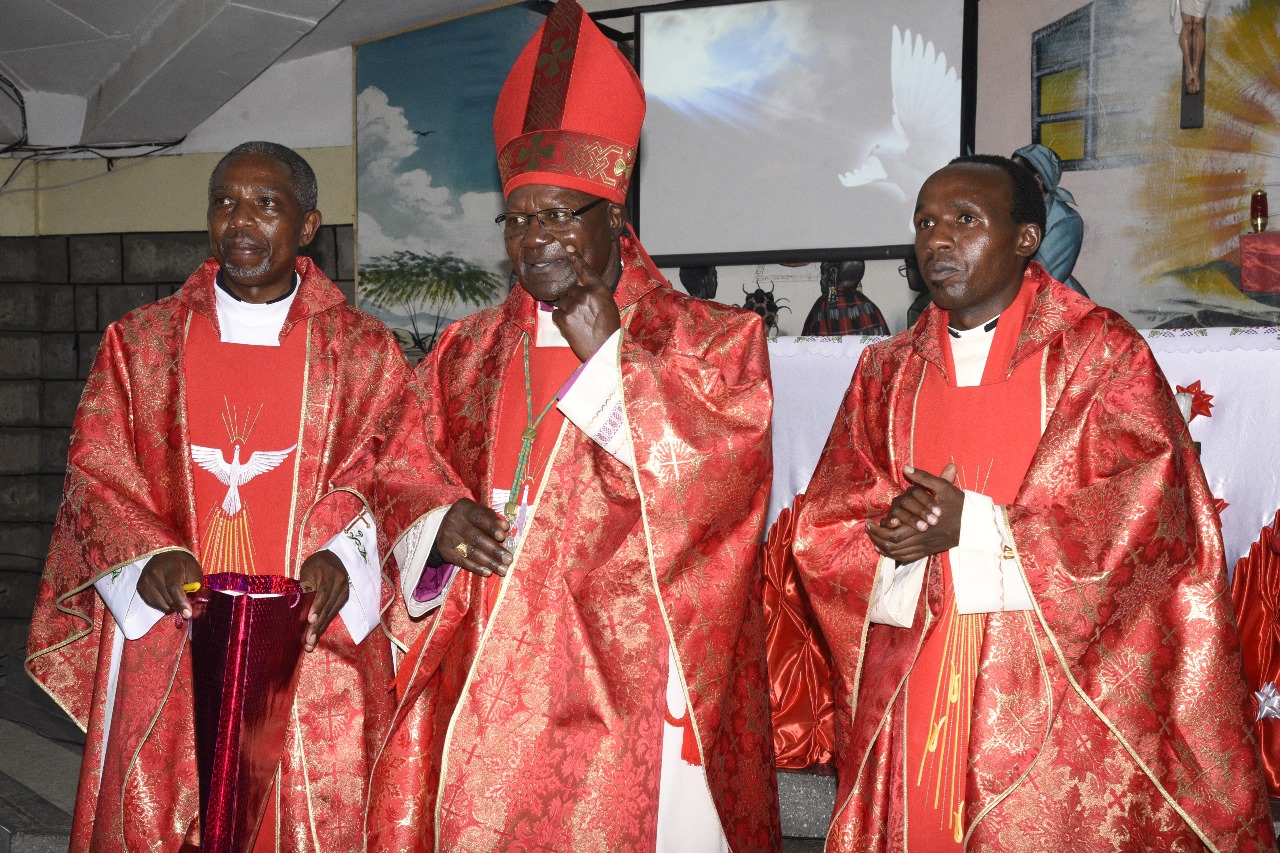
Today and Tomorrow
We have journeyed from a priest waiting for railway workers to leave a smoke-filled hall in 1960, to a thriving parish with a magnificent church, active lay community, numerous programs, and multiple outstations. St. John the Evangelist Parish has grown into a vibrant faith community with 57 Small Christian Communities (SCCs) strengthening unity and deepening faith.
Key Highlights
- 57 Small Christian Communities strengthen unity and deepen faith
- Increasing number of Baptisms and Matrimonies
- Five trained catechists and ten volunteers ensure continuous faith formation
- Outreach expanded to 21 outstations, supported by motorbikes
- Self-reliance through income-generating projects and a self-sustaining primary school
- Our latest initiative—a Parochial Primary School—responds to parents' desire for excellent Catholic education
- As District Headquarters, Kajiado holds strategic importance, and our Church's presence is valued
- United with active, forward-looking clergy and supported by dedicated laity, we continue to grow
Vision, Mission & Values
What guides our parish—our purpose, our hope, and the values that shape our community life.
“Champion of spiritual nourishment and service to humanity”
We envision a future where our parish stands as a beacon of spiritual growth and humanitarian service, touching lives and transforming communities through Christ’s love.
“To attain a holistic human growth through integrity, evangelization and sustainable community development”
We are dedicated to fostering comprehensive human development by upholding Christian values, spreading the Gospel, and creating lasting positive change in our community.
Rooted in Catholic Social Teachings and Identity
Our core values guide our decisions, strengthen our unity, and shape the way we serve God and neighbor.
Our Core Values
The virtues we practice as a parish family.
Join Our Parish Community
We invite you to become part of our faith family. Join us for Mass, participate in our ministries, or simply stop by for a visit.
Parish Life Gallery
Experience the vibrant spirit of our parish community through these moments of faith, fellowship, and celebration.